A sealed GTX 960 SSC, opened for the first time: EVGA's original assembly intact, one dried-out paste job refreshed
Nobody had ever opened this EVGA GTX 960 SSC. The factory screws were still torqued and the pad witness marks were untouched, so the only thing a decade had spoiled was the paste. We measured all five pads, repasted, and put it back together.
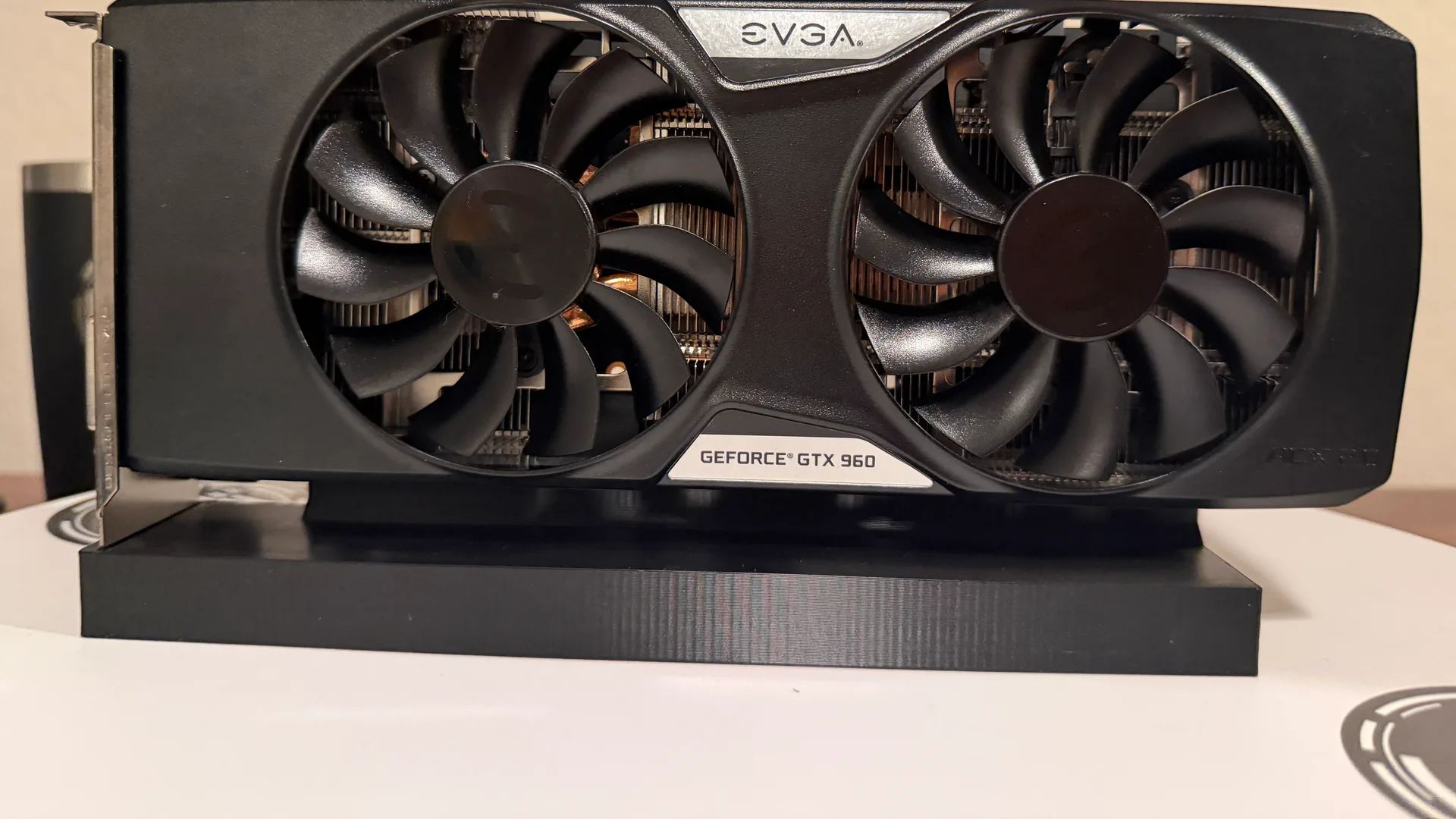
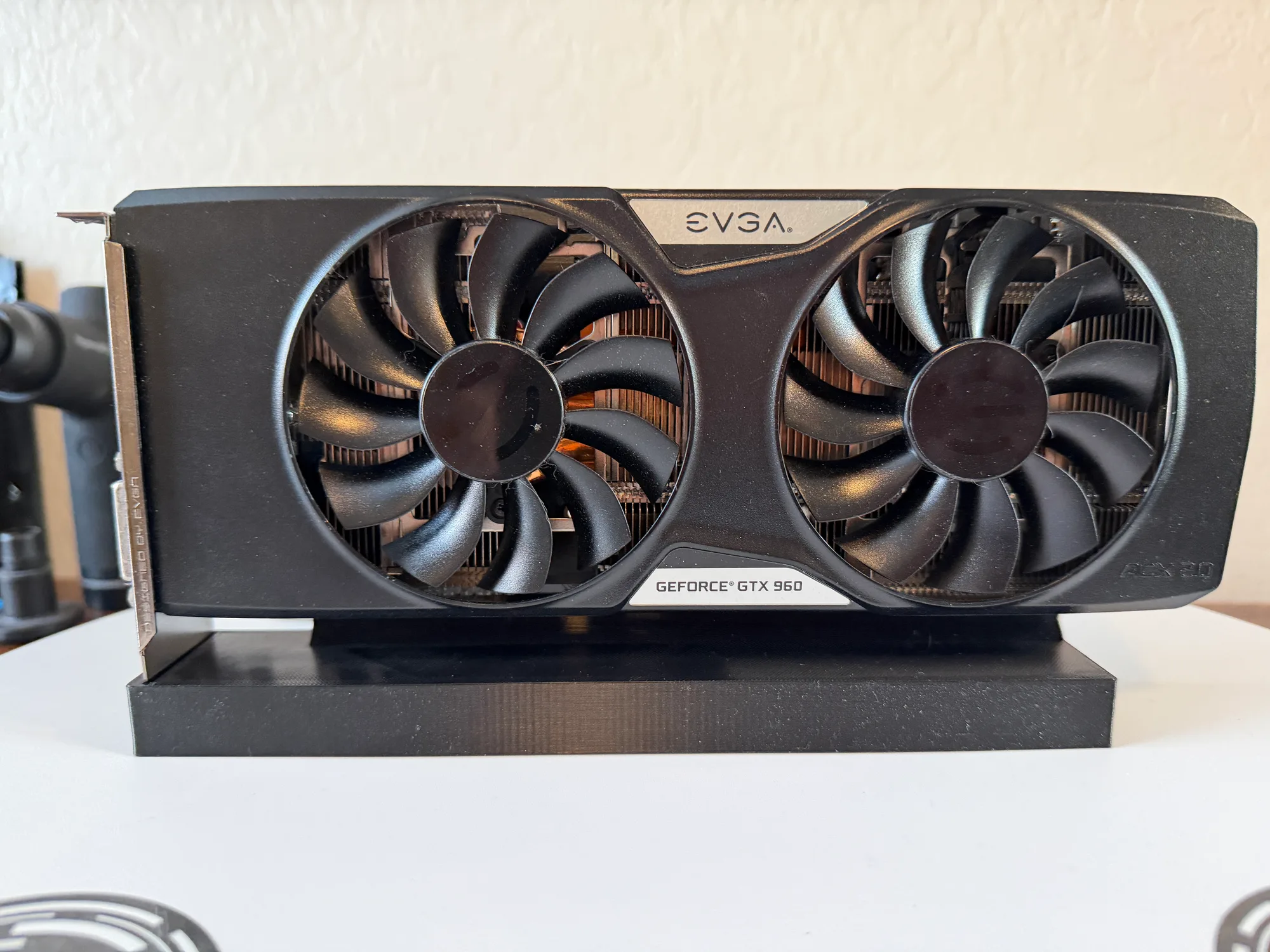 BEFOREAFTER
The card
- Model
- GTX 960
- Brand
- EVGA
- Series
- 900-series
- Architecture
- maxwell
- Memory
- 2 GB
- VBIOS
- 84.06.32.01.60
The numbers
Temperature under load
Dusty vs. clean, same benchmark.
Watch the clean
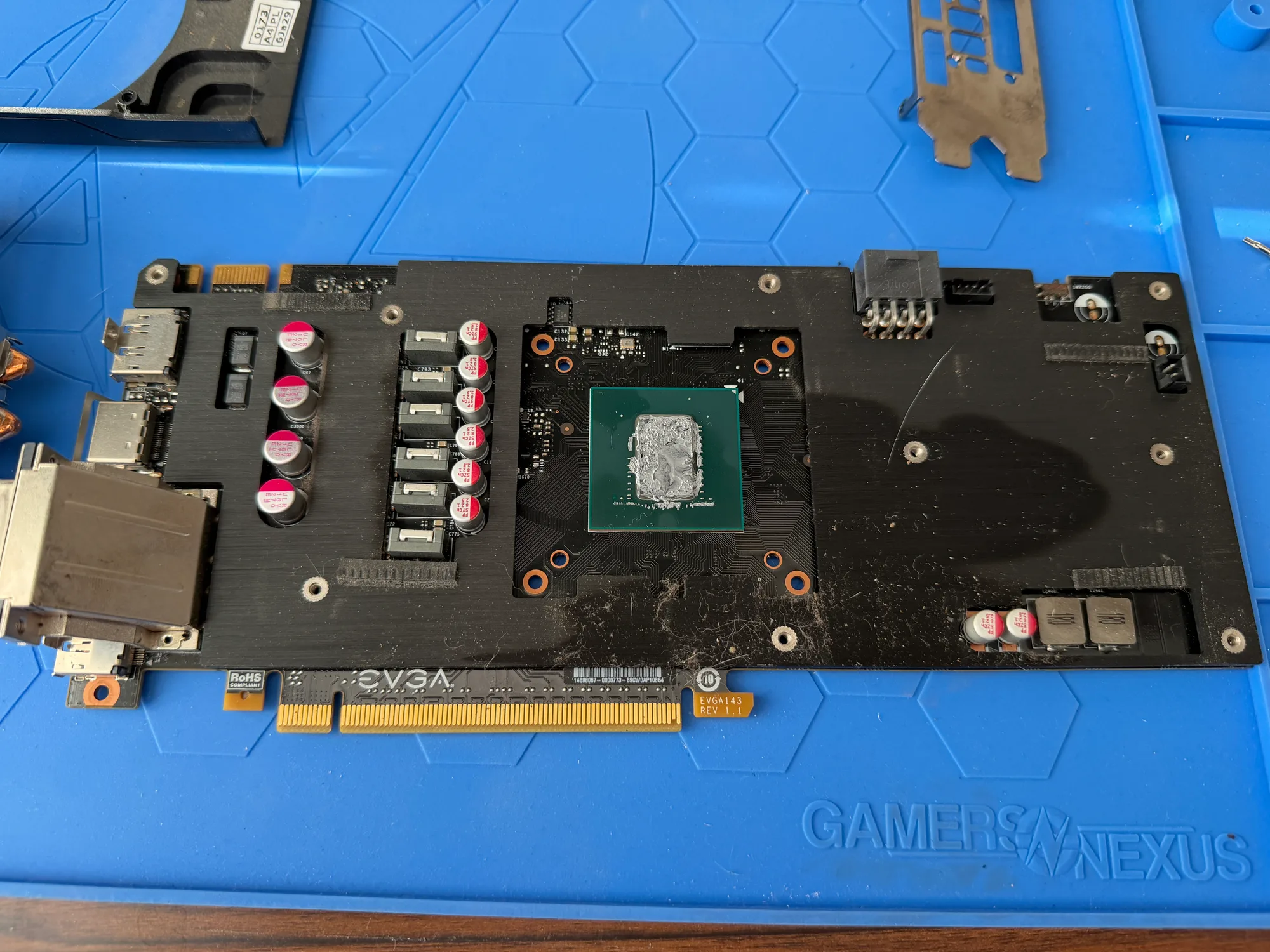
Every screw on this EVGA GTX 960 SSC was still sitting at factory torque. The little bolts that pin the I/O bracket, the larger one that runs through the PCB, the six that hold the shroud to the heatsink: all of them came out exactly the way EVGA left them in 2015. Pull the baseplate and the five thermal pads were still seated dead-on the little right-angle guides EVGA etched into the metal, never peeled, never reseated. Nobody had ever been in here. We were the first.
That matters more than it sounds. A used GTX 960 has usually been opened at least once, and a card that has been apart before is a card where someone may have over-torqued the die, smeared on too much paste, or lost a pad and shimmed it with the wrong thickness. This one carried none of that history. The original factory assembly was intact, and a decade had spoiled exactly one thing about it: the thermal paste on the die had dried to a thin, chalky film that had stopped doing its job.
A lot of cooler for a 120-watt chip
The SSC is EVGA's higher-binned 960, and they wrapped it in the ACX 2.0 cooler, which is frankly more heatsink than a GM206 needs. Three copper heatpipes pull off the GPU contact plate and feed two separate aluminum fin stacks, with the two fans bolted straight to the heatsink. That last detail makes teardown genuinely pleasant: no fan cables to thread through the shroud, the whole fan-and-sink assembly lifts off as one piece. For a chip that pulls around 120 watts under load, this is a cooler you would expect on something hungrier. EVGA built it heavy, and that headroom is the reason the card stays so composed once you give it fresh paste.
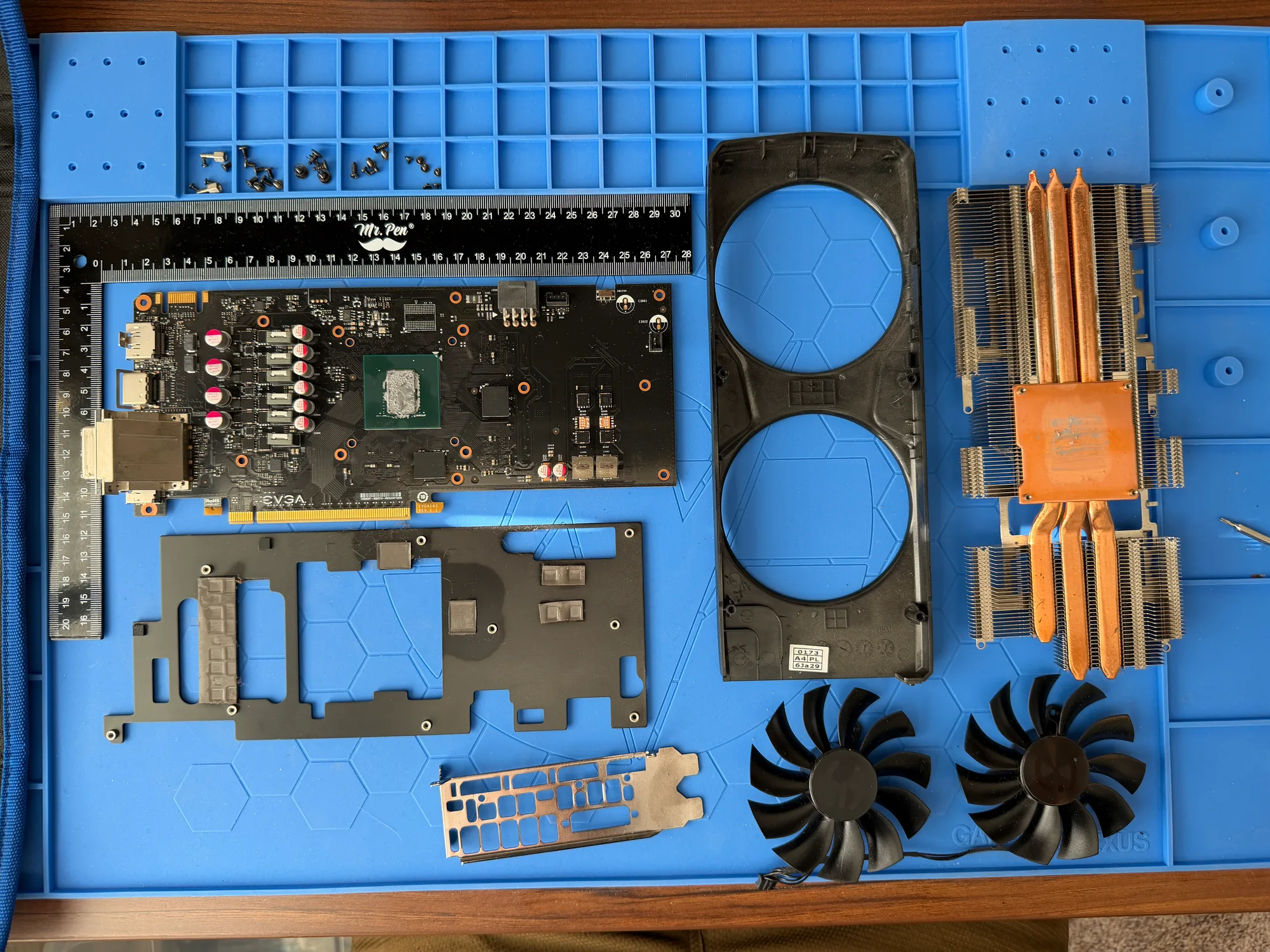
There is a small surprise on the top edge of the PCB too: a BIOS switch labeled with three positions. The 960 SSC ships with a dual-BIOS arrangement, so the second position is a backup you can fall back to if a flash goes wrong or one BIOS gets corrupted. It is the kind of feature that turned up on enthusiast cards of this era and quietly disappeared from cheaper boards later. Useful to know it is there if you ever tinker.
Every pad measured, then matched
This was the first card we documented the full thermal-pad set on, and it is worth doing properly because the pads are easy to get wrong. The 960 SSC runs five pads, all 1.5 mm thick, between the baseplate and the board. There is one long pad near the I/O side, roughly 59.5 by 17.5 mm, covering a row of small chips. Then two single-chip pads around 14 by 12 mm, and two more around 20 by 9 mm over the power stages. We measured each one off the card before peeling it, and EVGA made the layout easy to get right: the baseplate has small right-angle guides etched into the metal at the corner of every pad, a factory placement aid. Ten-year-old pads are past their prime, so we never reuse them. All five came off and fresh ones went back on the exact same footprints at the same 1.5 mm.
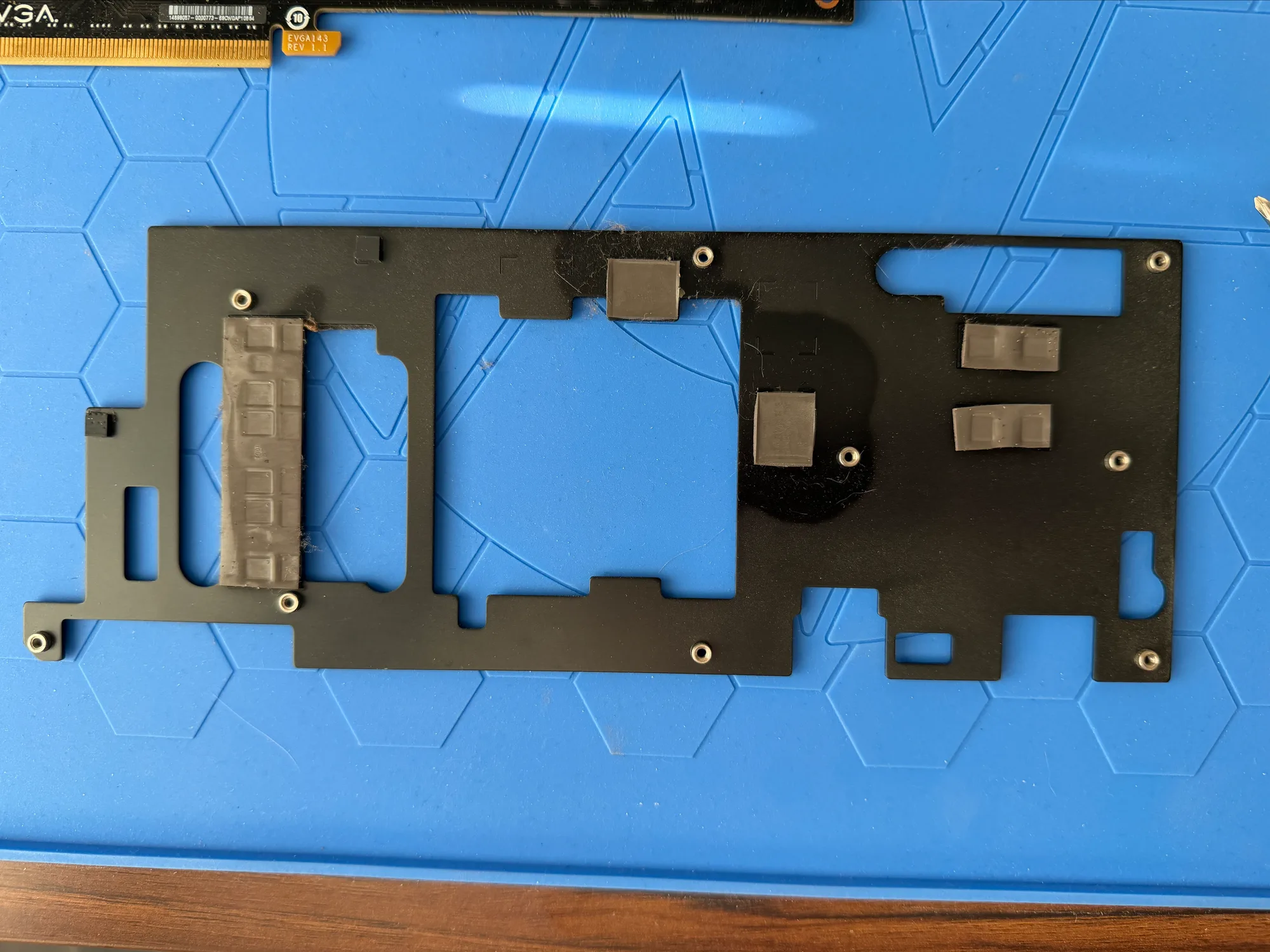
Replacing pads on the right footprints at the right thickness is not glamorous, but it is the difference between a card that contacts its memory and VRM properly and one that runs hot in a spot you never see on a sensor. Fresh 1.5 mm pads went back exactly where the old ones came from. Then the die itself, which is where the real heat problem lived.
What it bought on the bench
With fresh paste under the die and new pads on the memory, the card ran a good deal cooler. Under a sustained load the peak dropped from 76C to 64C. On a 15-minute heat soak, the worst case we throw at it, the ceiling came down from 81C to 71C and the SM clock actually held 51 MHz higher at the bottom of the soak, because there was more thermal margin to spend. Idle dropped from 40C to 36C. The fan tells the same story: its busiest moment fell from 45 percent to 34 percent, so the card is doing the same job with eleven points less fan to do it.
The frame rate did not move, and we would not expect it to. glmark2 came in at 23,903 before and 23,981 after, a 0.3 percent wobble that is just run-to-run noise. FP32 throughput sat at 2.32 TFLOPS both times. A 960 is clocked where it is clocked, and a thermal job does not raise the ceiling on a card that was never throttling in the first place. What lower temperatures buy on hardware like this is margin and quiet and a fan that is not working as hard to stay where it already was. On a ten-year-old card those are the things worth having.
Sealed for ten years, and the only thing wrong was a film of dried paste. Replace it, and the cooler EVGA overbuilt finally gets to do its job.
Condition, honestly
All five display outputs work: the DVI, the HDMI, and all three DisplayPorts were tested live on Windows, one at a time, and every one drove a real display.
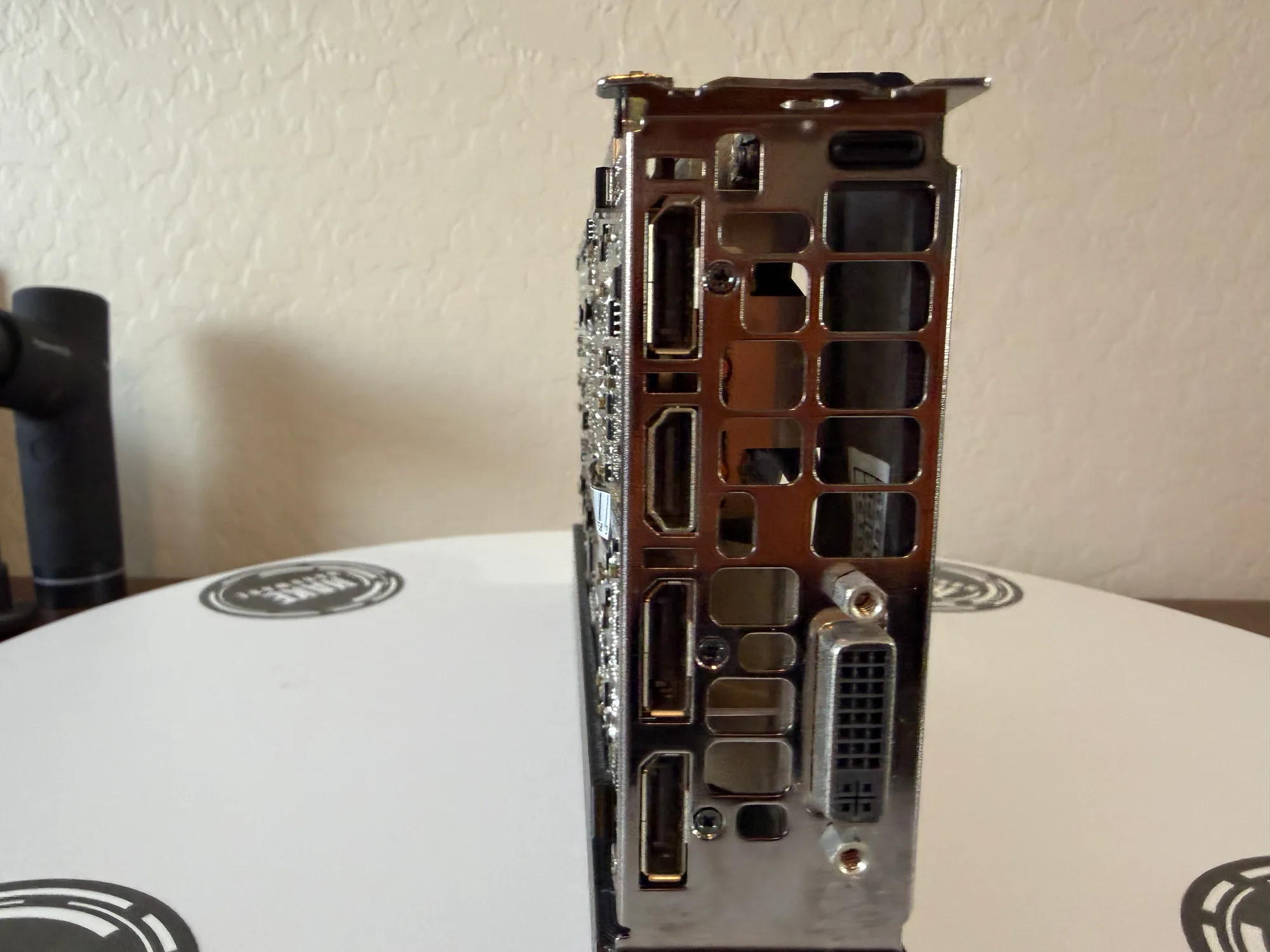
So here is what you are actually getting. A GTX 960 SSC that left EVGA's line in 2015 and stayed sealed until we opened it, with its original factory assembly untouched and both aging consumables, the thermal paste and all five thermal pads, freshly replaced. The paste had gone to chalk, and ten-year-old pads are past their prime too, so none of the old material went back on. An overbuilt cooler with plenty of margin, a working dual-BIOS switch, and five live display outputs. It runs twelve degrees cooler than it did and the fan barely has to try. That is a clean, honest 960, and now you know everything that happened to it.
Products used
As an affiliate, DustyFans may earn a commission from these links, at no cost to you.