The GTX 1050 Ti barely needed cleaning: the thermal paste was the whole story
Our first card came in barely dirty, on purpose. A fresh repaste still pulled about 5C off it at sustained load. It's power-limited at 75 watts, though, so it runs cooler and quieter, not faster.
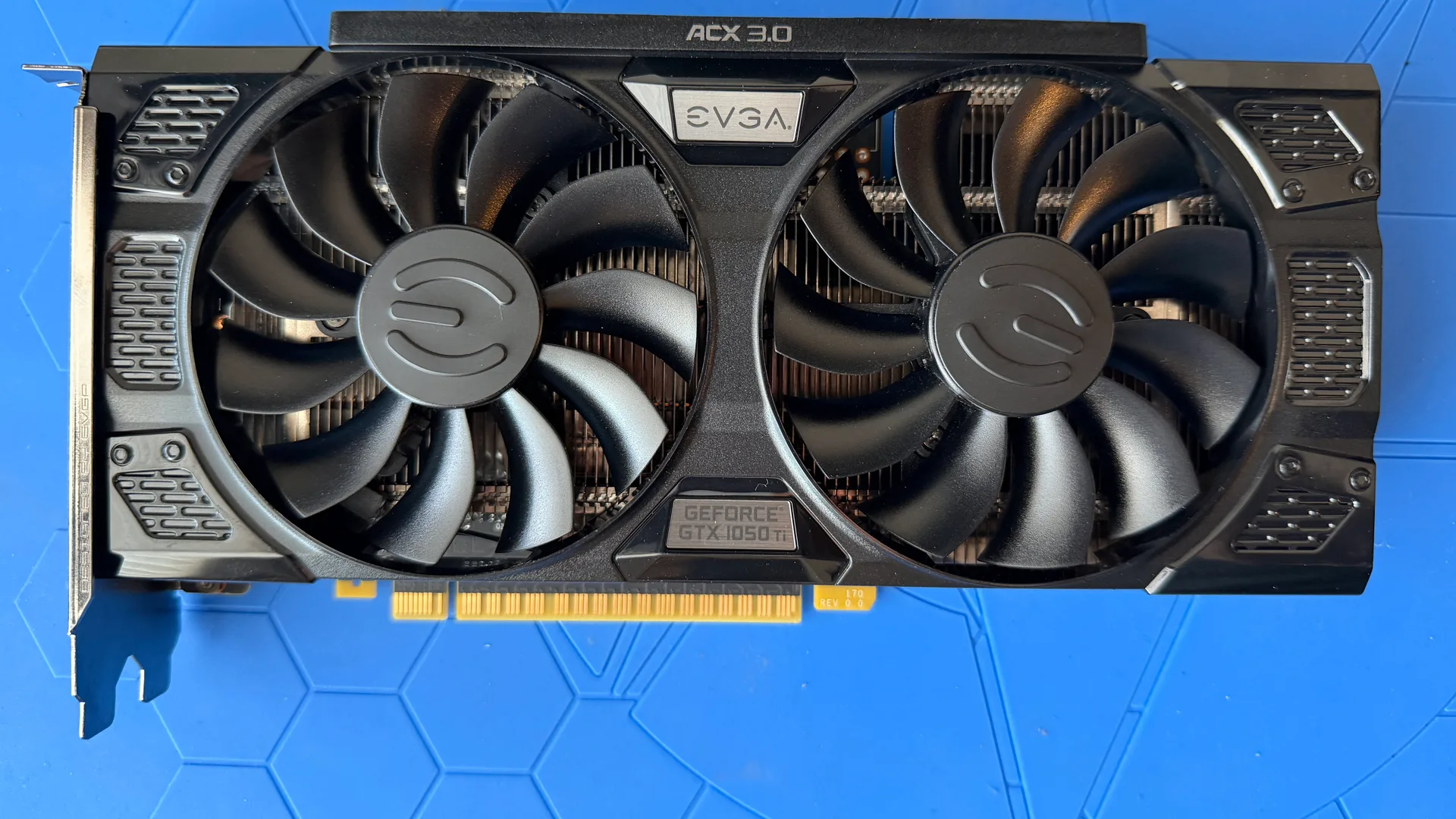
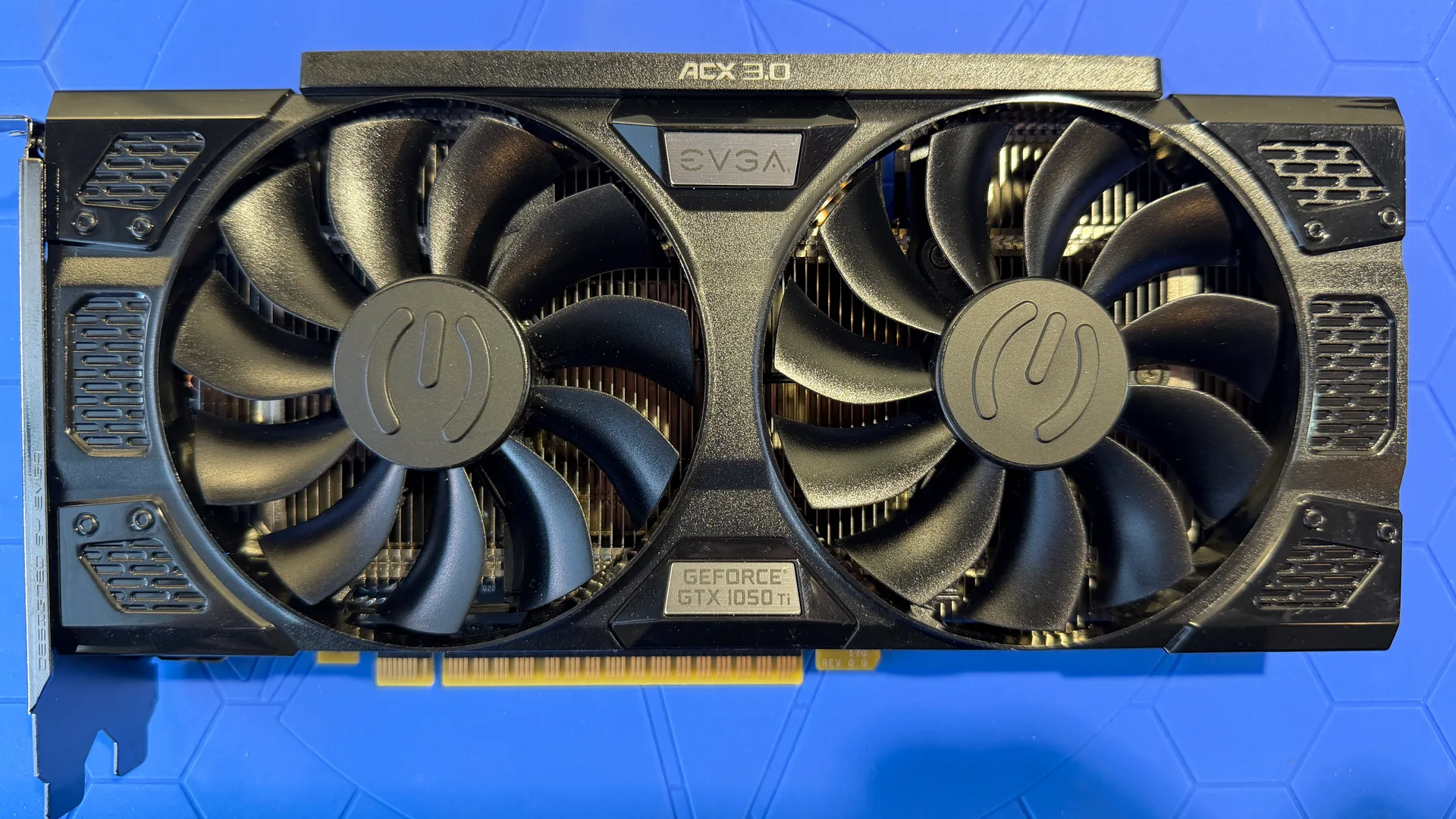 BEFOREAFTER
The card
- Model
- GTX 1050 Ti
- Brand
- EVGA
- Series
- 10-series
- Architecture
- pascal
- Memory
- 4 GB
- VBIOS
- 86.07.42.00.50
The numbers
Temperature under load
Dusty vs. clean, same benchmark. The dusty run hit thermal/power throttling.
Watch the clean
This is the first card we've run all the way through the bench: torn down, benchmarked before and after, stress-soaked, and QA'd. I picked it because it barely needed cleaning. The whole premise here is the real before and after, so card number one had to work on something where I couldn't lean on a dramatic pile of filth. I grabbed the cleanest 1050 Ti in the pile and let the bench say whatever it was going to say.
What it is
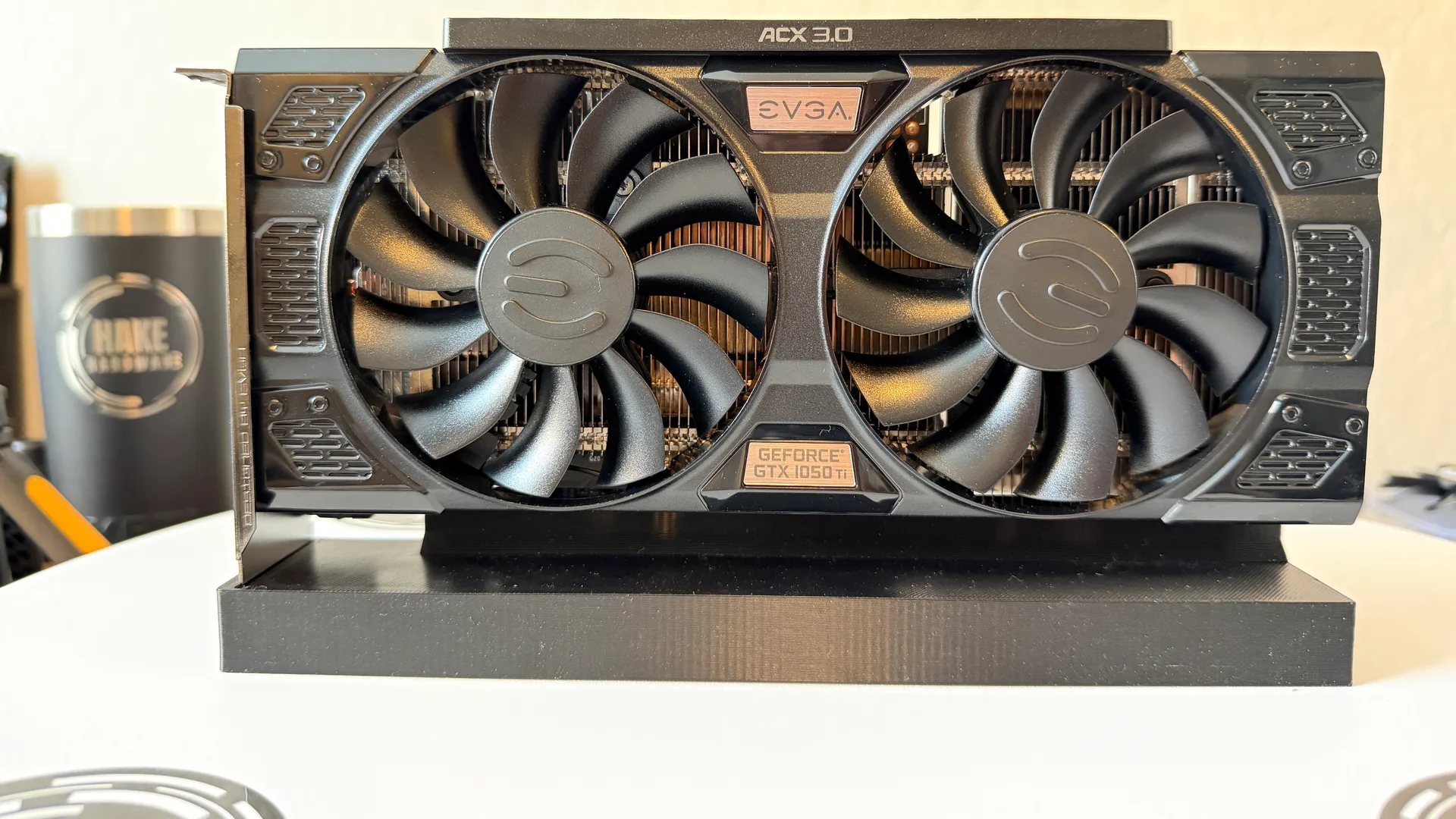
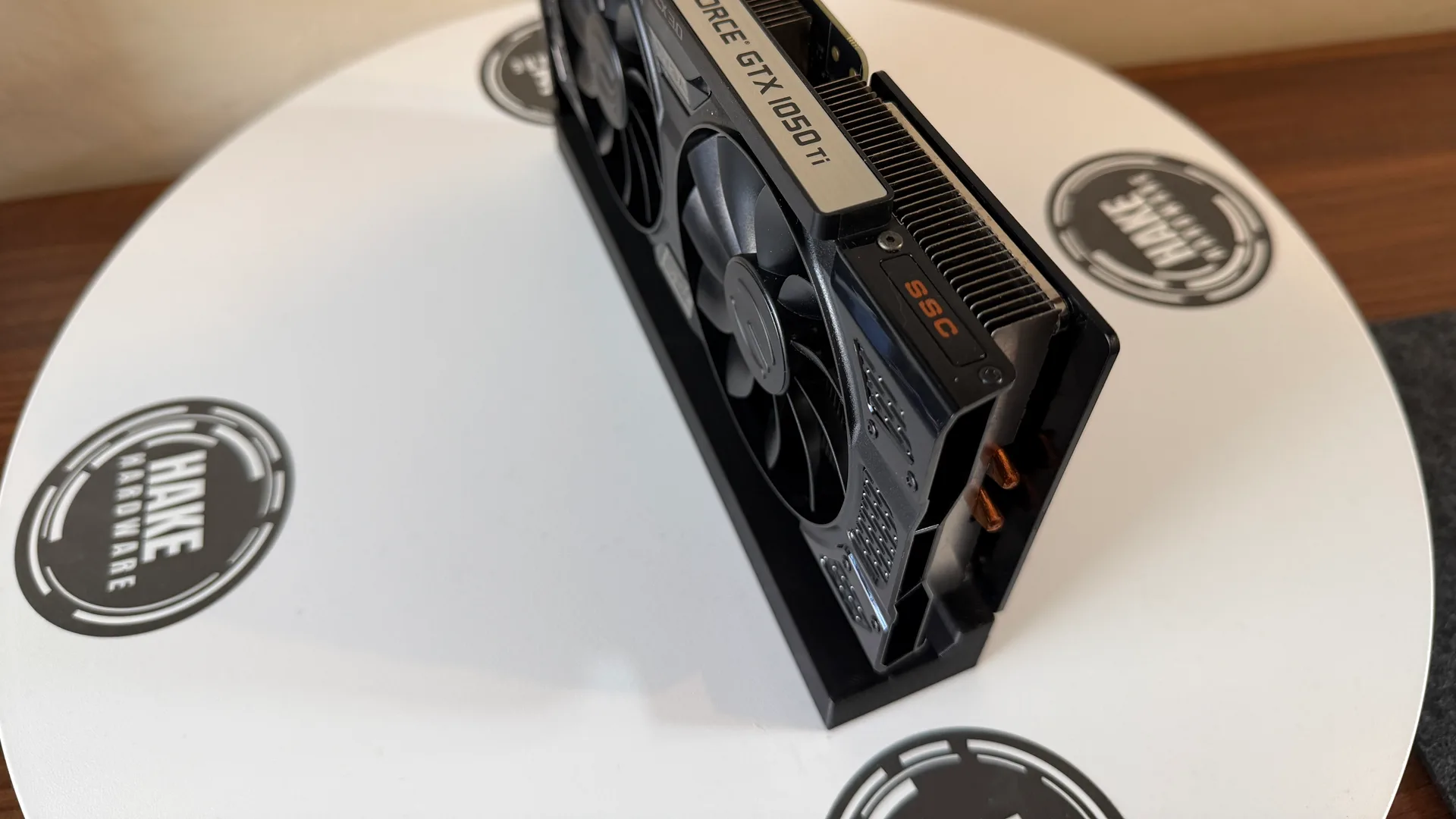
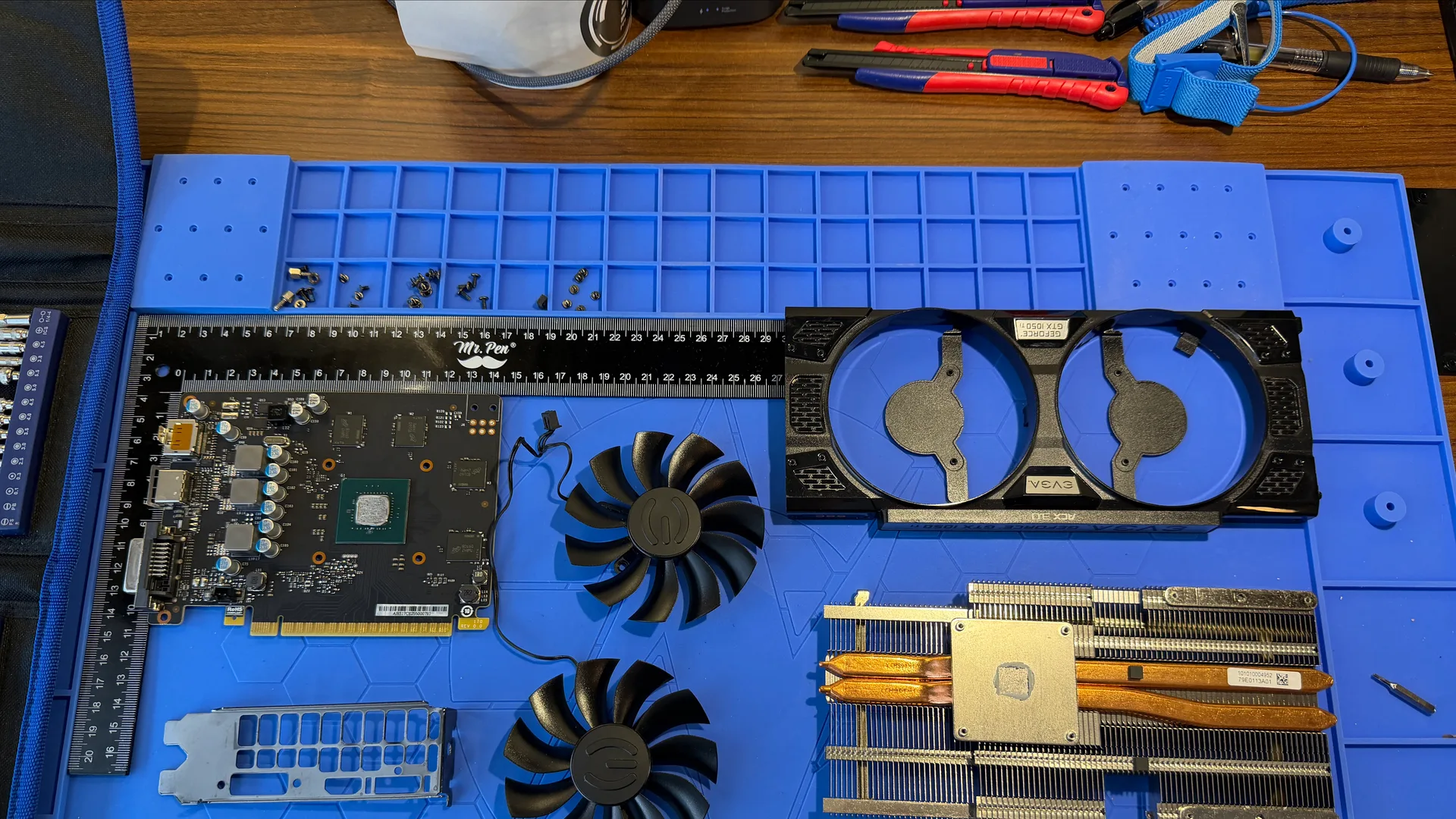
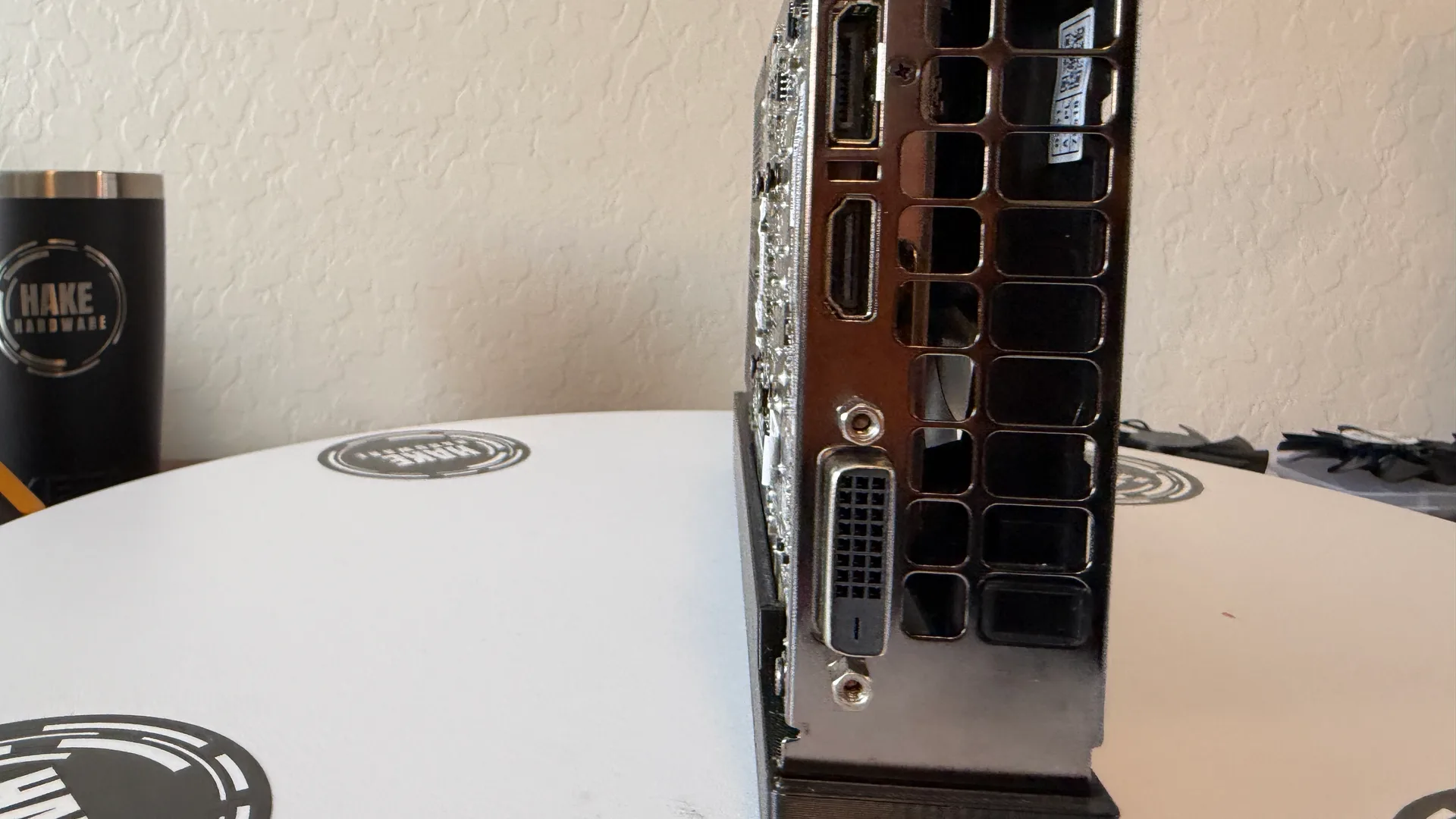
It's an EVGA GeForce GTX 1050 Ti SSC GAMING: the twin-fan ACX 3.0 model, factory-overclocked to a 1480 MHz boost. Pascal, 2016, 4GB of GDDR5. The 1050 Ti launched at $139 and became the default prebuilt upgrade. It pulls 75 watts straight from the PCIe slot with no power cable, so you could drop it into some beige office tower with a weak supply and suddenly play games. This SSC is the hottest-clocked version EVGA shipped that still runs cable-free. It also never got chewed up by miners, since 4GB and a low hashrate made it useless to them, so most of these led easy lives. That makes a clean one a good cheap card today for esports, an HTPC, or a retro Pascal build. Just don't ask 4GB to run a modern AAA game on high.
The catch: it was barely dirty
On our intake filth scale of 1 to 5, this was a 1. A little dust, nothing caked, fans spinning free. This is exactly the kind of card where you'd expect a clean to change nothing. That's why it went first. If all I did was blow out some dust and lay down fresh paste, would the bench even notice?
What a fresh repaste actually did
The dust wasn't the story. The paste was. Six-year-old factory thermal paste had gone hard, and a fresh layer of Kryonaut pulled about 5C off the temperature once the card was fully heat-soaked. The short bursts looked even better, around 9C, but the steady-state number is the honest one to quote, so call it 5. What it did not do is make the card faster. The graphics score and the FP32 number barely moved. This card is power-limited. It only ever gets 75 watts, and it was already cool enough to hold its full clocks, so a better thermal path had nothing left to give it. It sat pinned at its power limit the whole run, zero thermal throttling, before and after.
This card is wall-limited at 75 watts, by design. A clean makes it cooler and quieter. It was never going to make it faster.
So what did a clean actually buy this card? About 5C cooler at load, a slightly calmer fan, and a fresh layer of paste that buys it years. It did not buy frames per second, and anyone who tells you a wipe-down will is selling something. Every card here gets the same treatment and lands on the same honest scoreboard, whether it's a filthy flagship that sheds 20 degrees or a tidy 1050 Ti that was mostly fine to start with. This one was mostly fine. Now it's mostly fine and a few degrees cooler. We run every card the same way, and you can read exactly how on the methodology page.
Products used
As an affiliate, DustyFans may earn a commission from these links, at no cost to you.